

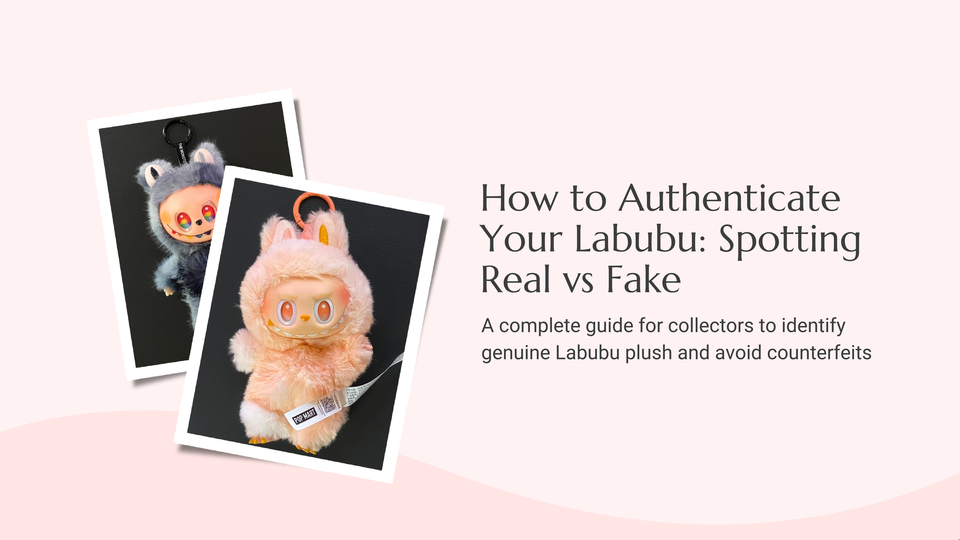
Have you ever scrolled through your favorite shopping app and seen a deal that looked too good to be true? Maybe it was a “The Monsters” vinyl plush at half the price. We have all been there! With the global craze for these cute yet mischievous elves, the market is unfortunately flooded with the fake labubu. These knockoffs can look very real at first glance, but they lack the soul and quality of the original Pop Mart creations. As a collector, nothing hurts more than finding out your new friend isn’t authentic.
In this guide, I want to share my personal journey and tips on how to keep your collection safe. We will dive into the history of the creator, Kasing Lung, and look at the tiny details that scammers often miss. Whether you are a seasoned pro or just starting your blind box adventure, this article is for you. Let’s make sure you never get tricked by a fake labubu again!
Who is Kasing Lung? The Brain Behind the Monsters
Before we talk about how to avoid a fake labubu, we must appreciate the artist who started it all. Kasing Lung is a world-famous illustrator born in Hong Kong and raised in the Netherlands. His unique style blends Nordic folklore with a touch of “ugly-cute” charm. He created “The Monsters” series in 2015, and Labubu quickly became the star of the show with those iconic serrated teeth and rabbit-like ears.
Kasing Lung’s work is deeply personal. He grew up reading fairytales from Northern Europe, which is why Labubu feels like a creature from an ancient forest. In 2019, he signed an exclusive deal with Pop Mart, turning these characters into a global phenomenon. Knowing the history of the artist helps you understand why the quality of a real figure is so high compared to a cheap fake labubu.
Kasing Lung: Quick Biography Table
| Detail | Information |
| Full Name | Kasing Lung (Lung Ka Sing) |
| Birth Date | December 31, 1972 |
| Origin | Hong Kong / Netherlands |
| Famous Work | The Monsters, Labubu, Zimomo |
| Style | Nordic-inspired Whimsical Surrealism |
| Partner | Pop Mart (Exclusive since 2019) |
Why the Fake Labubu Industry is Booming
You might wonder why there are so many replicas out there. It’s simple: demand! When celebrities like Lisa from BLACKPINK or Rihanna are spotted with a Labubu bag charm, the price on the secondary market skyrockets. Some rare “chase” figures can sell for thousands of dollars. This high price tag makes the fake labubu very tempting for scammers who want to make a quick profit from unsuspecting fans.
These counterfeiters have become quite clever. They use similar materials and even try to copy the official QR codes. However, they almost always fail when it comes to the fine details. By choosing a fake labubu, you aren’t just getting a lower-quality toy; you are also missing out on the joy of owning a piece of art that supports the original creator’s vision.
Check the Packaging Finish and Texture
The first line of defense against a fake labubu is the box. Pop Mart uses high-quality printing technology. A real box will have a matte finish that feels smooth and premium. If you tilt it under the light, the colors should look soft and muted. Most fakes, however, use cheap, glossy cardboard. If the box looks shiny or feels “plastic-y,” that is a huge red flag.
Another trick is to look at the “Trash Can” symbol on the back of the box. On an authentic package, the arrows in the recycling logo have rounded corners. On a fake labubu, these corners are often sharp or square. It sounds like a tiny detail, but it’s one of the hardest things for counterfeiters to get right!
The Golden Rule: Count the Teeth
Labubu is famous for those sharp, pointy teeth. But did you know there is a specific number? An authentic Labubu figure will always have exactly 9 teeth. If you are looking at a toy and it has 8 or 10, it is definitely a fake labubu. Scammers often overlook this simple fact when they are mass-producing replicas.
It’s not just the number that matters, but also how they look. Real Labubu teeth are neatly painted and have a small gap between the tooth and the blue lip line. In a fake labubu, the teeth might look messy, or they might be “merged” together with no clear spacing. Always give your new friend a quick dental check!
Scan the QR Code Carefully
Modern Pop Mart toys come with a holographic sticker and a QR code for authentication. When you scan it, it should take you directly to the official Pop Mart website. A fake labubu might have a QR code, but it often leads to a “dead” link or a copycat website that looks slightly “off.” Sometimes, the code has already been scanned hundreds of times by other people.
In 2026, many new series also include NFC chips inside the feet or the head. You can use your smartphone to “tap” the toy and verify it through the official app. If your “brand new” figure doesn’t have a working code or the sticker looks blurry, you are likely holding a fake labubu.
Inspect the Eyes and Face Paint
They say the eyes are the window to the soul, and that is true for toys too! Authentic Labubu eyes are made of a high-quality, glass-like material that reflects light beautifully. They should look “lively” and mischievous. On a fake labubu, the eyes often look flat, dull, or even “dead.” They might be glued on crookedly or have visible glue residue around the edges.
The paint on the face is another giveaway. Real figures have soft, airbrushed “blush” on the cheeks that blends perfectly into the skin. A fake labubu usually has harsh, bright circles that look like they were drawn on with a marker. The skin tone should be a pale peach color, not a bright orange or yellow.
The Black Light Test (UV Secret)
If you want to feel like a real detective, get yourself a small UV black light. This is one of the best ways to outsmart a fake labubu. On many authentic models, the paint on Labubu’s nose is reactive to UV light. When you shine the black light on it, the nose will glow!
Most counterfeiters don’t bother using specialized UV-reactive paint because it costs more money. If you shine a light on your figure and nothing happens, or if the whole face glows instead of just the nose, you might be dealing with a fake labubu. This is a pro-tip that many casual buyers don’t know about!
Feel the Material and Weight
Authentic Labubu figures are made from a high-grade vinyl that feels solid and slightly “heavy” for its size. When you hold a real one, it feels like a premium collectible. A fake labubu is often made from cheaper, lighter plastic. It might even have a strong “chemical” smell when you first open the box, which is a sign of low-quality materials.
If you have a plush version, check the stitching. Real plushies have hidden seams and very soft fur. A fake labubu plush will often have loose threads, “balding” patches in the fur, and seams that look like they might pop open at any moment. Quality control is something Pop Mart takes very seriously, while bootleggers do not.
Examine the Feet and Brand Logos
Turn your figure upside down! Every real Labubu will have the “Pop Mart” and “Kasing Lung” logos embossed on the bottom of the feet. The text should be crisp, clear, and easy to read. On a fake labubu, the logos might be blurry, misspelled, or missing entirely.
Sometimes, the fake ones even have the logo, but it’s printed on instead of being embossed (raised) into the vinyl. Also, check the flexibility. Real Labubu feet are usually somewhat flexible and can rotate 360 degrees smoothly. If the feet feel stuck or are made of a very hard, brittle plastic, it’s a fake labubu.
Beware of “Too Good to Be True” Prices
We all love a bargain, but price is often the biggest indicator of a fake labubu. If a rare, sold-out “Macaron” series Labubu is being sold for $10 when the market price is $60, it’s a scam. Authentic retailers like Pop Mart, Mindzai, or official Amazon stores have set prices.
If you are buying from a secondary marketplace, always check the seller’s rating. If they have hundreds of the same “rare” figure in stock for a low price, they are definitely selling the fake labubu. Real collectors know how hard it is to find certain pieces, so seeing a “limitless” supply is a huge red flag.
Trust Your Instincts and the Community
The Labubu community is amazing! If you are ever unsure, there are many Facebook groups and Discord servers where experts can help you. You can post a photo and ask, “Is this a fake labubu?” More often than not, someone will be able to spot the fake in seconds.
I remember when I bought my first Zimomo (Labubu’s big brother). I was so nervous that I spent an hour comparing it to photos online. It turns out, that “gut feeling” is usually right. If something feels off about the weight, the smell, or the look, don’t be afraid to ask for a refund or report the seller.
Where to Buy Authentic Labubu Figures
The best way to avoid a fake labubu is to buy from authorized sources. Here are a few places you can trust:
- Official Pop Mart Stores: Both physical and online.
- Verified Retailers: Places like Strangelove, Myplasticheart, or Rotofugi.
- Official Flagship Stores: Look for the “verified” checkmark on sites like AliExpress (only the official Pop Mart store!) or Tmall.
Buying from these places ensures that Kasing Lung gets his royalties and that you get a high-quality product that will actually hold its value over time. Remember, a fake labubu has zero resale value, but a real one is an investment!
Conclusion
Collecting toys should be a fun and rewarding hobby. By learning how to spot a fake labubu, you are protecting yourself and the art community. Remember to check the teeth, scan the code, and use that UV light! Labubu is a character full of heart and history, and he deserves a spot on your shelf in his true, authentic form.
Do you have any “horror stories” about accidentally buying a replica? Or maybe a tip I missed? Leave a comment below and let’s help each other build the best collections possible. Stay safe and happy hunting!
Frequently Asked Questions (FAQs)
1. How many teeth does a real Labubu have?
An authentic Labubu always has 9 teeth. If the figure has more or fewer, it is a fake labubu.
2. Do all Labubu toys have a QR code?
Most modern Labubu figures (especially from 2021 onwards) come with a QR code or NFC chip on the box. Older, rare releases might not have them, so you’ll need to check other details like the paint and weight.
3. Can a fake Labubu glow under UV light?
Usually, no. Real Labubus often have UV-reactive paint on the nose. A fake labubu typically uses standard paint that does not glow.
4. Why is the fake Labubu so common?
Because the demand is huge! High resale prices and celebrity endorsements make Labubu a prime target for counterfeiters looking to make money.
5. Is it okay to buy a “replica” if I just want it for decoration?
While it’s your choice, we don’t recommend it. Replicas often use unsafe materials and do not support the original artist, Kasing Lung. Plus, a fake labubu won’t have the same high-quality look.
6. Where is the best place to check if my Labubu is real?
The official Pop Mart app is the best place. You can scan the code or use the NFC feature to get an instant verification of your figure.
