

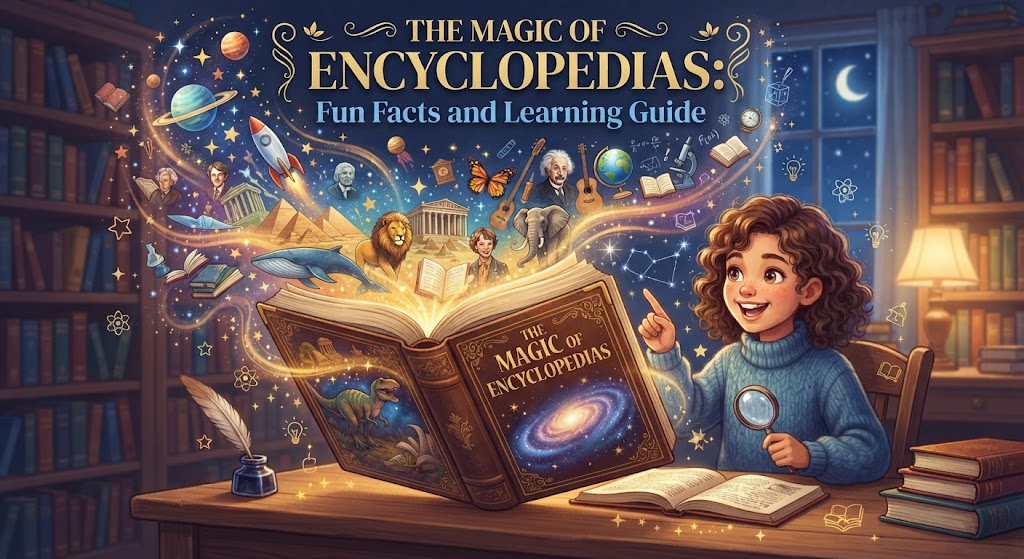
Have you ever wondered how people find out so many cool facts about the world? Long ago, before we could look up answers on a fast computer screen, people used large books called encyclopedias. These special books are like treasure chests filled with facts about plants, animals, history, and space. Whenever I wanted to learn about dinosaurs as a child, I pulled heavy reference books right off the wooden shelf. Flipping through those crisp paper pages felt like going on a grand adventure. Today, encyclopedias continue to spark our curiosity and help young learners discover how things work. They make learning fun by breaking down big, complicated ideas into bite-sized pieces that anyone can easily understand.
What Are Encyclopedias?
At their very core, encyclopedias are large collections of written knowledge. They cover almost every topic you can ever dream of exploring. Think of them as giant maps that guide your brain through history, science, and art. Instead of telling a made-up story, these books share real facts and verified truth. Whenever you need help with school projects, encyclopedias are your best friends. They give you clear facts without any confusing words. They act like a safe bridge between what you already know and the giant universe waiting to be explored.
A Quick History of Reference Books
People have tried to collect all world knowledge for thousands of years. Ancient scholars wrote massive scrolls to save important ideas from being lost. Over time, book makers realized that organizing information alphabetically made it much easier to read. This smart change gave birth to modern encyclopedias that families proudly displayed in their living rooms. My grandfather once showed me a dusty set from the 1960s. He explained how families saved money for months just to buy a complete set. These historic books proved that humans have always loved sharing information and learning new things together.
Print Books vs. Digital Screens
Times have changed quite a bit since the days of heavy multi-volume book sets. Today, we often use online encyclopedias on tablets, phones, and laptops. Digital pages load in a split second and let us search for words instantly. However, physical books still hold a special kind of magic. Turning real paper pages helps your brain remember fun facts much better. Whether you read a glowing screen or a bound paper book, encyclopedias deliver the exact same wonderful gift: pure knowledge. Both formats help curious minds grow smarter every single day.
Exploring General Knowledge Topics
One of the coolest parts about encyclopedias is the sheer variety of subjects they cover. You can read about ancient pyramids on one page and leap into outer space on the next. General reference tools touch on geography, famous leaders, and deep oceans. When I was young, I loved reading about distant countries I had never visited. Encyclopedias paint vivid pictures of distant lands using simple words and bright photographs. This wide mix of subjects ensures that every single reader finds something that sparks their unique imagination.
Special Subject Reference Guides
Sometimes, general books do not share enough details about one specific topic. That is why specialized encyclopedias exist for science buffs and animal lovers. You can find unique volumes entirely dedicated to bugs, cars, or musical instruments. These focused books dive deep into single subjects to answer your trickiest questions. If you love reptiles, a reptile reference guide will show you every scale and habitat. Specialized encyclopedias let experts share their deep passion with kids and adults who want to learn more.
Fun Facts Inside Reference Pages
Reading reference texts does not have to feel like boring schoolwork at all. Encyclopedias are packed with weird, wild, and surprising trivia. Did you know that some frogs can freeze solid during winter and wake up safely in spring? I found that exact amazing fact inside an animal reference book years ago. Encyclopedias turn everyday learning into a fun treasure hunt. Every single turn of the page reveals a brand new secret about our wonderful, fascinating planet earth.
How Famous Biographies Are Organized
Learning about real people who changed the world is deeply inspiring for kids. Encyclopedias include short life stories called biographies for important historical figures. Below is a quick biography table showing how these life details are typically organized for readers:
| Biography Category | Description & Example |
| Full Name | The complete birth name of the historical figure (e.g., Albert Einstein). |
| Lifespan | The exact years they were born and passed away (e.g., 1879–1955). |
| Main Achievement | What they are most famous for doing (e.g., Created the Theory of Relativity). |
| Fun Personal Fact | A quirky or interesting detail about their daily life (e.g., He loved playing the violin). |
Why Kids Love Learning With Books
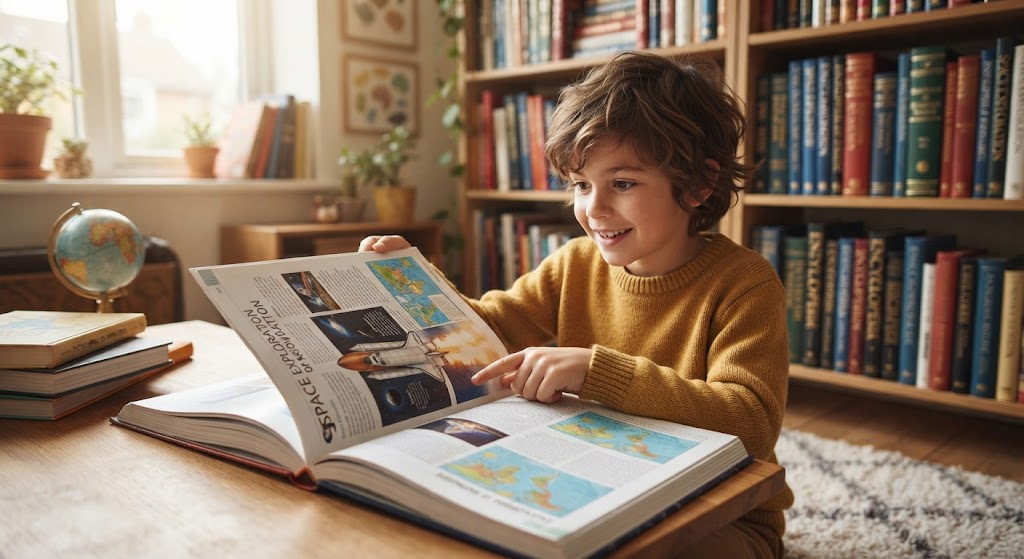
Children possess a natural wonder about how the universe works around them. Encyclopedias feed this healthy curiosity by giving clear, honest answers to endless questions. When a child asks why the sky is blue, a quick look provides an easy science lesson. Parents and teachers love using encyclopedias because they encourage independent thinking and reading habits. Children feel proud when they look up answers all by themselves. This simple habit builds lifelong confidence and a deep love for continuous learning.
The Future of Shared Human Knowledge
Technology keeps marching forward, changing how we store and share information every year. Modern encyclopedias now feature cool 3D models, videos, and interactive maps right on your screen. Even with all these high-tech upgrades, the main goal remains completely unchanged. Encyclopedias still aim to make truth and learning accessible to everyone on earth. As technology grows, our favorite reference tools will keep finding new ways to amaze and educate future generations.
Conclusion
To wrap things up, encyclopedias are truly magical tools that open doors to endless worlds of discovery. From ancient paper books to modern digital screens, they help us understand science, history, and nature. Reading them builds smart habits and feeds our natural curiosity. Now it is your turn to join the adventure! What is one cool topic you want to look up in an encyclopedia today? Drop a comment below and share your favorite fun fact with us!
Frequently Asked Questions (FAQs)
1. What are encyclopedias used for?
They are used to find quick, factual information about a massive variety of topics, including science, history, and geography.
2. Are online encyclopedias safe for school work?
Yes, but it is always smart to double-check facts with trusted websites or printed books to ensure the information is correct.
3. Who writes the articles inside encyclopedias?
Experts, scientists, teachers, and specialized researchers write and check the entries to make sure all facts are completely true.
4. What is the difference between a dictionary and an encyclopedia?
A dictionary tells you what a word means and how to spell it, while an encyclopedia explains the actual history, science, or background of a topic.
5. Can kids easily read encyclopedias?
Many modern reference books are specifically written with simple words, bright pictures, and short sentences designed for young readers.
6. Do printed encyclopedias still exist today?
Yes! Even though digital screens are very popular, many libraries and families still love collecting physical books.
