

Introduction to the Legal System
Have you ever wondered who keeps order when people disagree on rules? That essential task belongs to the judiciary. The judiciary acts as a fair referee for society. When lawmakers write rules and leaders enforce them, courts make sure everyone follows them fairly. Without a strong court system, communities would struggle to settle arguments peacefully.
Every single day, judges hear cases that affect your daily life. They help protect human rights, solve business fights, and keep neighborhoods safe. Understanding how the judiciary functions gives you real confidence. You will know where to turn if you ever face a legal problem. Let us explore how courts work in simple, easy terms.
Table of Contents
What Is the Role of the Judiciary?
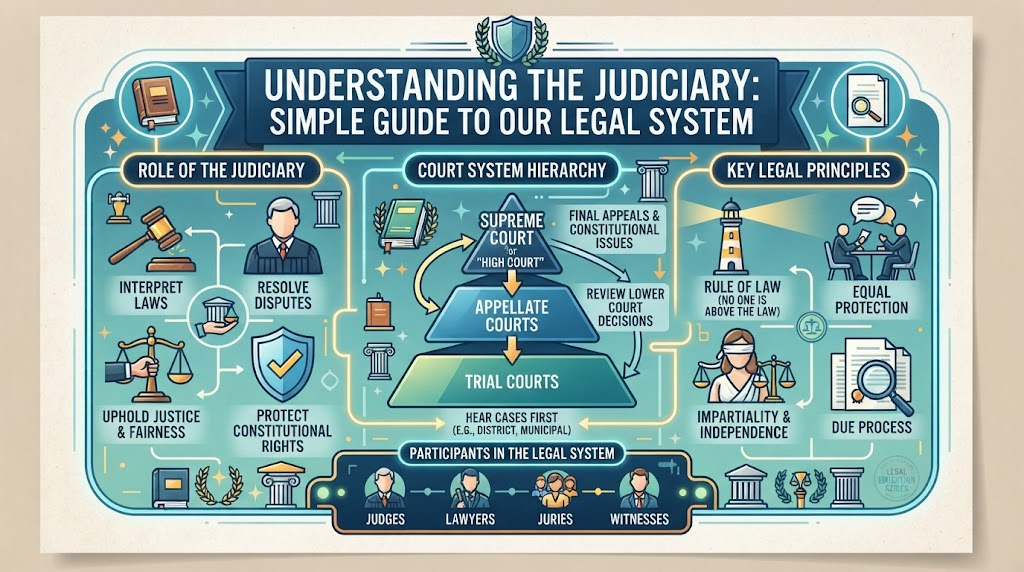
The main job of the judiciary is to interpret laws passed by leaders. When a rule seems confusing, judges read it carefully to decide what it really means. They look at past rulings to ensure every decision stays fair and balanced.
Another major task is settling peaceful arguments between neighbors, businesses, or government bodies. When two people cannot agree on a contract or property line, they ask a judge to decide. This careful process prevents personal fights and keeps society running smoothly.
How Lower Courts Handle Daily Issues
Most legal stories start inside small trial courtrooms. Local judges listen to witnesses, check evidence, and hear both sides of a story carefully. These local tribunals deal with daily problems like traffic fines, small claims, and local housing disagreements.
If someone gets accused of breaking a local rule, they present their side here. Local trial judges make fast, practical decisions to help regular citizens resolve conflicts without long delays. They keep community life balanced and organized every day.
The Power of Appeals Courts
Sometimes a person feels a local trial decision was unfair or made a mistake. That is when they ask higher appellate courts to take a second look. These higher courts do not call new witnesses or hold brand-new trials. Instead, panel judges review old court papers to ensure proper rules were followed correctly.
Appellate courts fix mistakes made during earlier hearings. If a local judge used the wrong law, the appeals court can change the final result. This extra step gives everyday people a crucial safety net within the legal process.
Protecting Your Constitutional Rights
Your national charter promises basic freedoms like free speech, privacy, and personal protection. The judiciary serves as the head guardian of those essential human rights. If a leader creates an unfair rule that hurts citizens, courts step in to stop it.
Judges check new legislation to ensure it aligns with your fundamental constitutional rights. If a law breaks those high rules, the judiciary cancels it completely. This process keeps power balanced so no single government branch becomes too strong.
Criminal Cases vs Civil Cases
| Case Type | Purpose | Possible Outcome |
| Criminal Cases | Address offenses against public safety | Fines, probation, or jail time |
| Civil Cases | Resolve private disputes between parties | Financial compensation or specific actions |
Legal matters usually split into two main buckets: criminal cases and civil cases. Criminal matters start when someone breaks public safety rules. The government brings the case to court to protect community well-being. Punishments can include fines, community service, or jail sentences.
Civil disputes happen between private people or businesses. Examples include broken business contracts, family disagreements, or property damage claims. Instead of sending people to jail, civil judges order fair payments to fix damage done.
Why Independent Judges Matter
Imagine playing a football game where the referee favors one team. That would feel unfair! The judiciary needs complete independence so judges remain neutral during every trial. They must focus purely on facts and written laws rather than political pressure.
Independent judges treat rich people, poor citizens, and powerful politicians exactly the same way. This absolute equality builds deep trust across towns and cities. People respect court rulings because they know decisions come from facts, not favoritism.
The Path of Important Legal Decisions
When higher courts deliver Rulings, those legal decisions set examples for future cases. This rule is known as legal precedent. Lower judges must follow past rulings when deciding similar disputes later on.
Precedent brings needed stability to daily life. You can plan business deals and personal choices because you know how laws get used. Consistent legal decisions keep the entire legal system predictable, stable, and clear for everyone.
How a Bill Becomes Tested Law
Lawmakers write and pass new statutes every single year. However, a law is only valid if it respects existing foundational principles. The judiciary tests fresh legislation whenever citizens challenge its fairness in court.
Through formal judicial review, judges inspect new rules line by line. If a statute limits basic rights without cause, judges invalidate it. This important test guarantees that every new law remains helpful, legal, and fair.
The Role of the Supreme Court
At the top of the court system stands the Supreme Court. This high court handles only the most critical constitutional questions affecting the nation. When lower courts disagree on a major rule, the Supreme Court provides the final answer.
Decisions made by Supreme Court justices apply across the entire land. Their official rulings settle huge legal questions for generations. The judiciary uses this supreme authority to ensure uniform justice everywhere.
How Everyday Citizens Interact With Courts
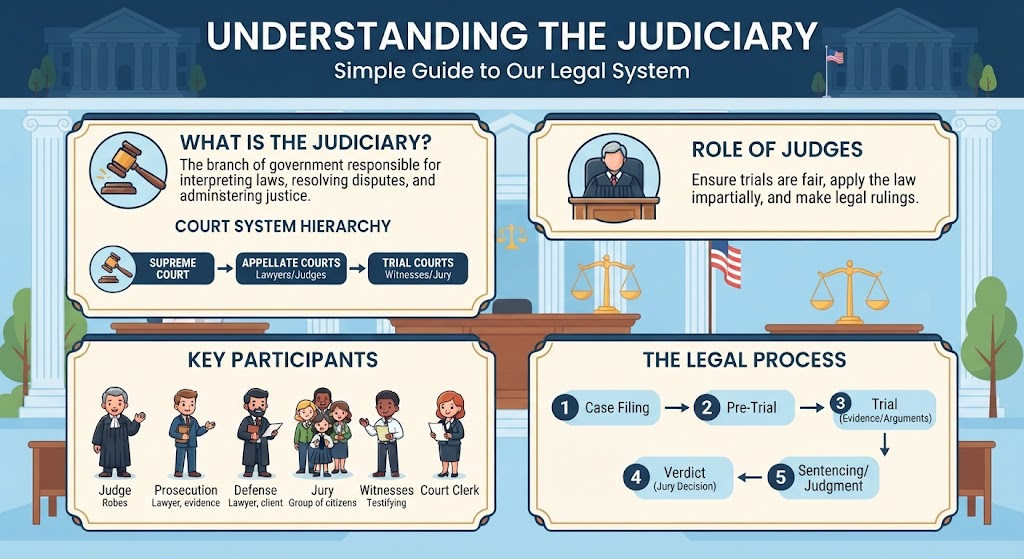
Most people only see courtrooms on television, but regular citizens play big roles in real life. You might get called for jury duty to help decide a criminal case. Jurors listen to facts and help determine if someone is innocent or guilty.
You might also visit local courts to file a small business claim, update family records, or testify as a witness. The judiciary exists to serve you directly. Knowing your rights helps you navigate these interactions with ease and peace of mind.
The Future of Modern Modern Legal Systems
Courtrooms are changing fast thanks to helpful modern technology. Many court systems now hold digital video hearings so people can join from home. Digital filing systems also make submitting legal papers quicker and cheaper.
These technological updates help reduce delays so cases get resolved much faster. As courts adopt newer tools, access to justice grows easier for everyone. The fundamental mission of the judiciary stays the same: protecting rights and keeping society fair for all.
Conclusion
The judiciary is essential for maintaining order, protecting fundamental constitutional rights, and resolving everyday conflicts fairly. From local trial courts to the Supreme Court, judges ensure that laws apply equally to every single person. Understanding how your legal system works empowers you to protect your rights and engage with your community confidently.
Frequently Asked Questions (FAQs)
1. What is the main job of the judiciary?
The primary function of the judiciary is to interpret laws, settle legal disputes between parties, and ensure the constitution is upheld fairly.
2. How does a civil case differ from a criminal case?
Criminal cases deal with offenses against public safety brought by the government. Civil cases involve private disputes between individuals or organizations over contracts, property, or injuries.
3. Why is judicial independence so important?
Judicial independence allows judges to make fair decisions based strictly on law and evidence without political pressure or outside influence.
4. What happens during judicial review?
During judicial review, higher courts examine laws or government actions to ensure they do not violate constitutional rights. Unconstitutional laws can be struck down.
5. What is legal precedent?
Legal precedent refers to past court rulings that guide judges on how to decide similar cases in the future, ensuring consistency across the legal system.
6. Can regular citizens participate in court proceedings?
Yes! Citizens participate by serving as jurors, testifying as witnesses, or filing claims to resolve personal and business disputes.
